Blog / Guide
Write to UsBackconnect Proxies: What They Are and Why Businesses Use Them
April 29, 2026
Guide
As platforms become more defensive against repeated automated traffic, one static IP is often insufficient for professional data workflows.
A backconnect proxy service rotates outgoing IPs from a managed pool so teams can collect data, monitor competitors, and run automation with fewer interruptions.
Instead of manually swapping proxies, users connect to one gateway while the service handles rotation automatically.
What Is a Backconnect Proxy Service?
A backconnect proxy sits between your device and the web while dynamically changing the IP address used for requests.
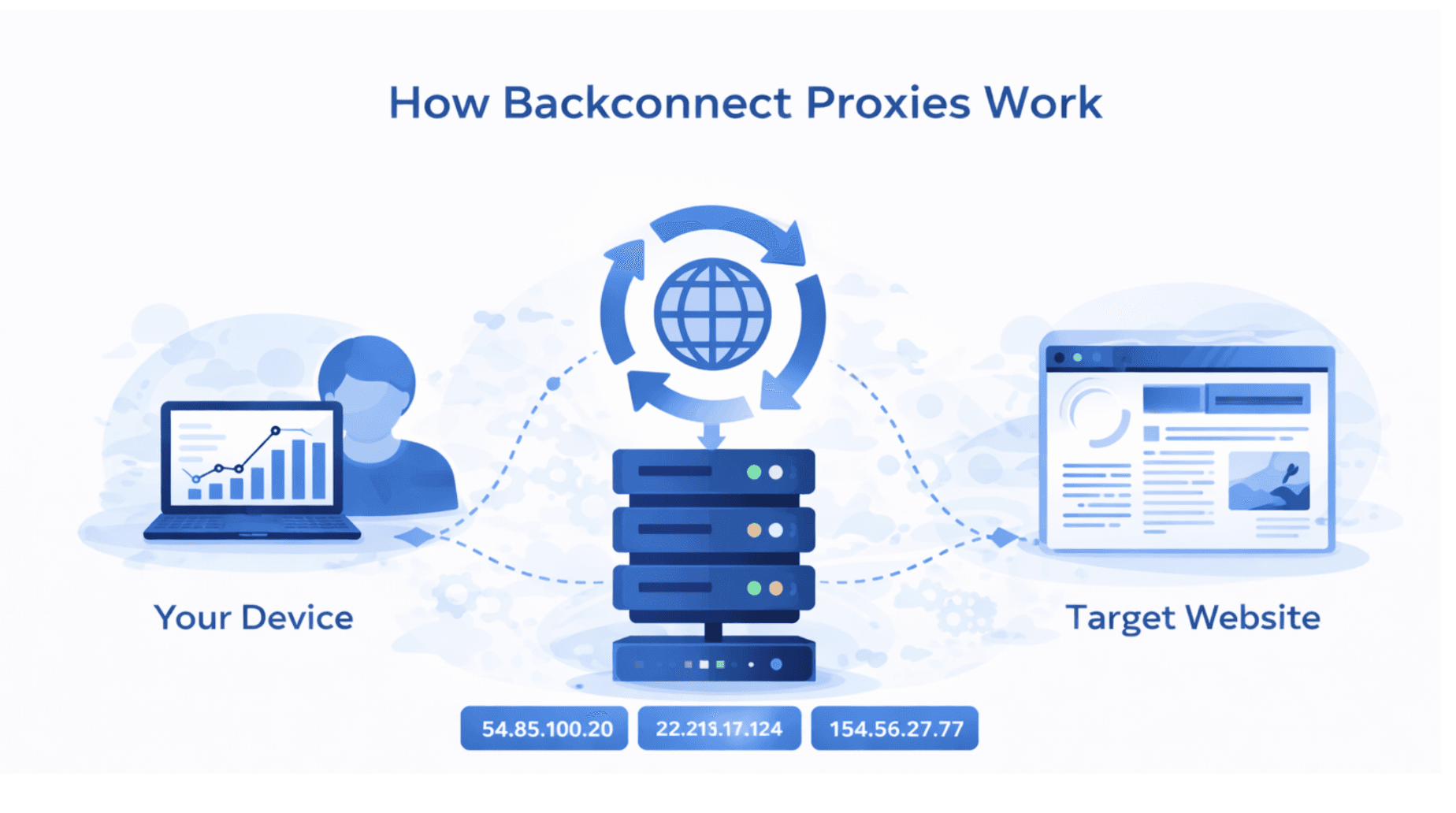
Here is the basic flow:
- You connect to one proxy gateway
- The service routes requests through an IP from its pool
- Each request can use a different IP automatically
- Websites see varied traffic instead of repeated hits
From your side, you manage one endpoint while the provider handles IP rotation behind the scenes.
How Backconnect Proxies Work
A backconnect server acts as an intermediary. Each request is forwarded with a different IP selected from a large pool.
This rotation improves anonymity and lowers the chance of IP bans because target websites see diversified request origins.
It enables consistent web scraping, data collection, and access to location-sensitive content without manual switching.
Why Businesses Use Backconnect Proxies
Large-scale web data collection
Large crawls from one IP often trigger bans, CAPTCHAs, slowdowns, and blocked sessions. Backconnect pools distribute load to keep collection stable.
Continuous competitor monitoring
Auto-rotation and optional sticky sessions support long-running monitoring for pricing, stock, and campaign intelligence.
Managing multiple online accounts
Varying request origins helps reduce suspicious repeated login patterns when teams manage many accounts.
SEO and search result tracking
- Track rankings by region
- Monitor keyword visibility
- Analyze competitor positioning
- Collect less-biased search results
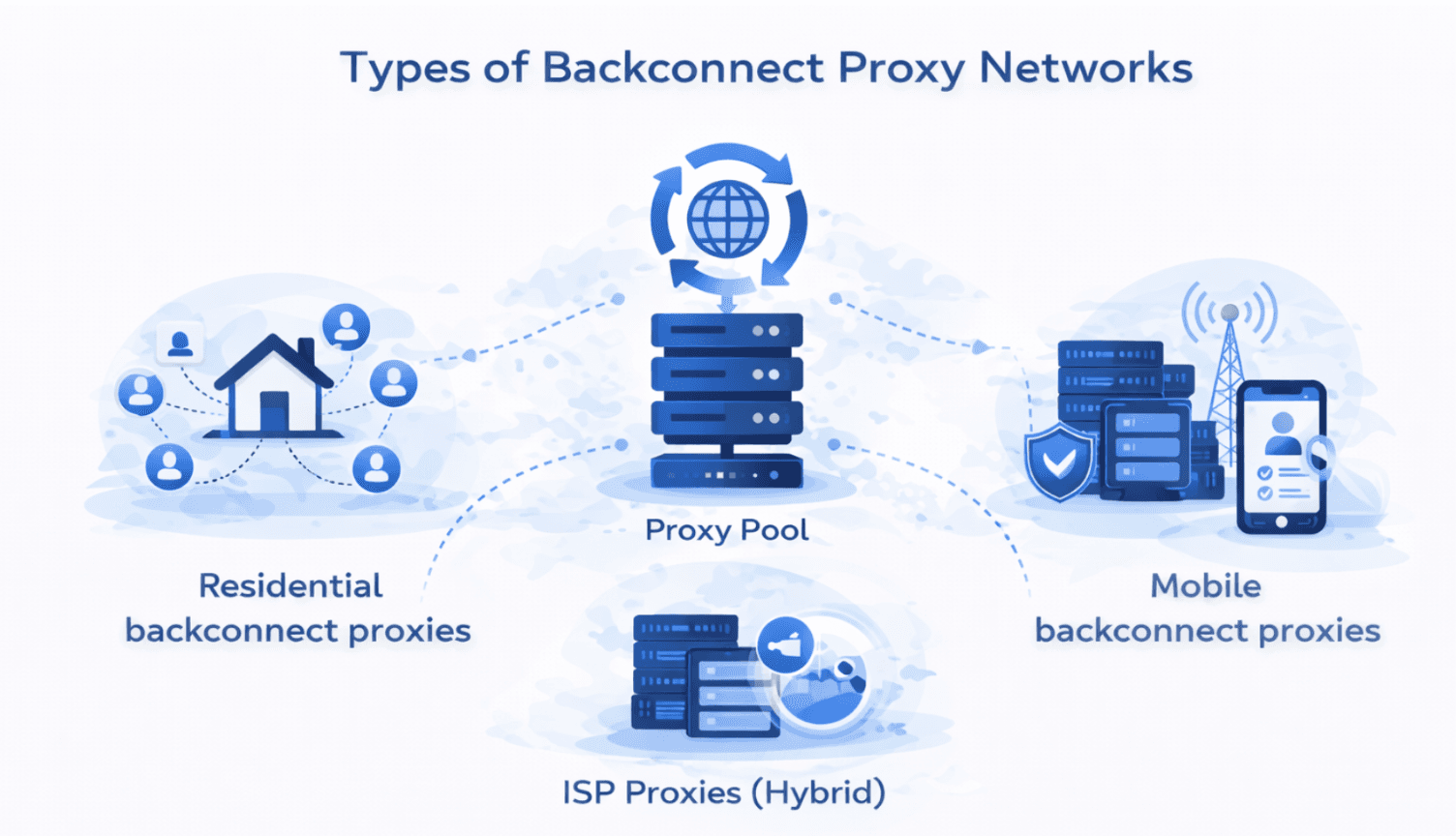
Types of Backconnect Proxy Networks
Providers build backconnect networks from different IP sources:
- Residential: harder to detect on consumer platforms
- Datacenter: faster and cheaper, but easier to classify
- Mobile: trusted carrier IP behavior for strict targets
- ISP: hybrid model combining datacenter hosting with ISP ranges
The best mix depends on site sensitivity and project scale.
Proxy Network and Management
A well-managed backconnect network continuously rotates IPs, monitors health, and replaces blocked endpoints.
This management layer is critical for uninterrupted high-volume scraping and repeated request workflows.
Businesses gain operational stability without manual proxy upkeep.
Dedicated Proxies and Cost Management
Dedicated proxies provide stable single-user IPs and are useful when consistency is mandatory, but they scale cost quickly.
Backconnect services are often more cost-effective for projects needing broad IP coverage, rotation, and growth flexibility.
Backconnect Proxy Servers and Security
Rotating pools mask your original IP and provide stronger privacy for activities like market research and competitive analysis.
Security benefits include lower ban risk, better anonymity, and reduced traceability of sensitive collection workflows.
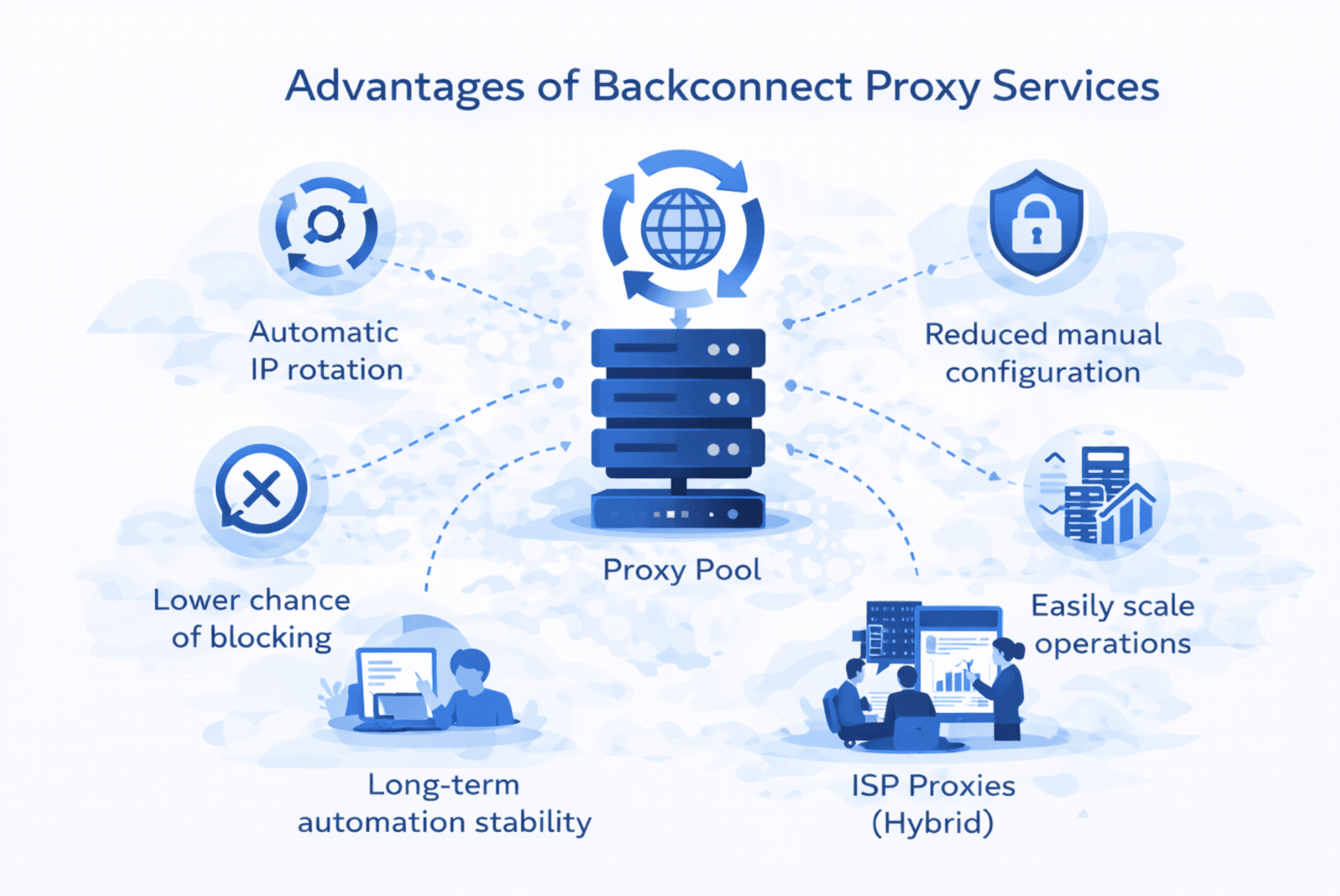
Advantages of Backconnect Proxy Services
Compared to static setups, major benefits include:
- Automatic IP rotation
- Reduced manual configuration
- Lower blocking risk
- Improved long-term automation stability
- Easier scaling for larger operations
One gateway architecture also makes integration easier for scripts, scraping tools, and research systems.
When You Might Not Need Backconnect Proxies
For lightweight browsing or small one-off tasks, static proxies may be enough.
Backconnect services become most valuable when:
- Request frequency is high
- Automation is involved
- Multiple locations are required
- Long-running workflows must stay uninterrupted
Backconnect Proxies: Key Takeaways
Backconnect proxies provide scalable anonymity, automatic IP rotation, and resilient access for modern data-driven operations.
As rotation technology and network management continue to improve, backconnect systems will remain core infrastructure for teams that depend on reliable collection, monitoring, and automation.
Backconnect Proxy FAQs
What does a backconnect proxy service do?
A backconnect proxy service automatically rotates IP addresses from a managed pool for outgoing requests. This reduces blocking risk and supports continuous automated workflows.
Are backconnect proxies the same as rotating proxies?
Who typically uses backconnect proxy services?
Do backconnect proxies improve scraping success rates?
Are backconnect proxies legal to use?
Is a backconnect proxy better than a static proxy?

LightningProxies Team
Technical Writers @LightningProxies
February 18, 2026
Guide
Proxies for Scraping: How They Work and How to Choose the Right Type
Learn how rotating proxy infrastructure improves scraping reliability, reduces blocks, and supports stable large-scale data collection.
February 15, 2026
Guide
SEO Proxies: Why They Matter More Than Ever for Real SEO Work
See why SEO teams rely on proxy rotation for regional rank checks, unbiased SERP data, and long-running monitoring tasks.

February 18, 2026
Guide
What Is a Mobile Proxy?
Understand mobile proxy behavior, trust characteristics, and why rotating carrier IPs matter for difficult platforms.