Blog / Guide
Write to UsAre Free Proxies Worth It? Why They Are Not Safe for Serious Use
April 29, 2026
Guide
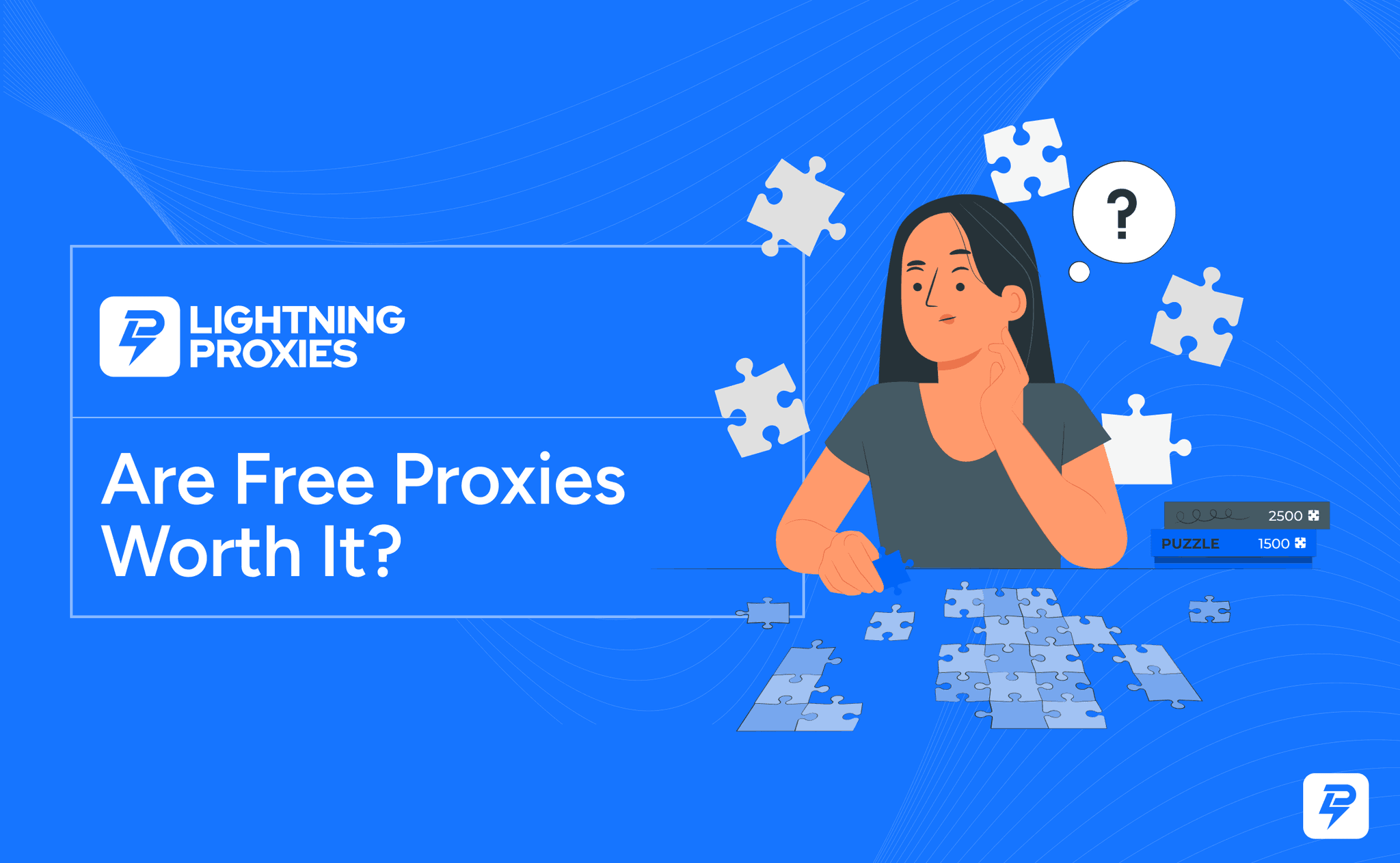
Free proxies can look appealing: no upfront cost, quick access, and no commitment. For light experimentation, they can feel like an easy shortcut.
For reliability, security, and long-term performance, paid proxy infrastructure is usually a better fit. In most real workloads, free proxies are unstable, insecure, and rarely worth the risk.
How Free Proxies Work
Free proxies are often publicly listed IPs that anyone can use. They may be shared by many users at once, scraped from open servers, or sourced from misconfigured systems.
Unlike paid providers, operators frequently do not maintain infrastructure, monitor abuse, or guarantee uptime. Congestion and overuse commonly cause slow or dropped connections.
Web-based free proxies often handle only HTTP or HTTPS traffic and tend to offer weaker security and reliability than managed alternatives.
The Dangers of Open Proxies
Open or public proxies can be accessed without meaningful authentication. That convenience comes with serious exposure: some endpoints are run by malicious actors who may intercept sensitive traffic.
Public lists can also be associated with malware distribution or abuse-driven traffic patterns. Using an unknown open proxy can put both personal data and broader systems at risk.
Security Risks of Free Proxies
When traffic routes through a proxy, the proxy can potentially observe that traffic. If the operator is untrustworthy, sensitive information may be logged, manipulated, or stolen.
Common risk categories include:
- Data interception
- Credential theft
- Session hijacking
- Malware injection
- Traffic manipulation
Many free endpoints lack strong encryption and clear accountability, which makes it hard to verify who controls the server or how requests are handled.
High Block Rates and Poor Performance
Free proxies are heavily overused. Thousands of users may share the same IP, and many lists do not offer healthy rotation or clean pools.
- Frequent IP bans
- CAPTCHA challenges
- Slow response times
- Connection failures
- Unstable uptime
Websites often detect and blacklist public proxy IPs. For scraping, price monitoring, SEO tracking, or automation, that instability usually breaks workflows.
No Privacy Guarantees
Proxies do not automatically guarantee privacy. Free services may:
- Log user activity
- Sell browsing data
- Inject tracking scripts
- Redirect traffic
Without transparent policies, some free networks behave like data harvesting operations where the product is user activity rather than the proxy itself.
Lack of Support and Accountability
Paid providers typically invest in support, documentation, monitoring, and replacement options when IPs degrade.
Free public lists provide none of that. When an IP fails, teams end up hunting for another address instead of fixing root causes. For production automation, that churn destroys throughput and reliability.
Legal and Compliance Concerns
Free proxy sourcing is often opaque. That makes it difficult to verify ethical IP acquisition or to defend compliance decisions under audit.
Routing business traffic through unknown infrastructure can also associate your activity with abusive or compromised IPs, which can create reputation and security follow-on effects.
Why Businesses Avoid Free Proxies
For serious data collection, automation, or account workflows, the savings rarely justify the downside. Teams typically prioritize:
- Stable uptime
- Clean IP reputation
- Secure connections
- Transparent sourcing
- Scalability
Safe Alternatives and Best Practices
A safer path is managed infrastructure with clear sourcing, rotation controls, and support. Compare proxy categories based on your target sensitivity, for example residential, datacenter, ISP, mobile, and IPv6.
For provider selection, use a structured evaluation framework such as how to choose a proxy provider.
Final Thoughts on Free Proxies
Free proxies are not truly free. The cost often shows up as data exposure, unreliable performance, blocked IPs, or compromised security.
For business operations, sensitive data, or large-scale automation, investing in secure and reputable proxy infrastructure is a requirement—not an optional upgrade.
Free Proxy FAQs
Are free proxies safe to use?
Generally no. Many free proxies lack encryption, transparency, and accountability, which increases the risk of interception or logging by unknown operators.
Can free proxies steal my data?
Why are free proxies often blocked?
Do free proxies provide anonymity?
Are free proxies suitable for web scraping?
What is a safer alternative to free proxies?
April 29, 2026
Guide
Are Proxies Legal? What Businesses and Individuals Need to Know
See how legality depends on use case and jurisdiction, and how responsible practices reduce risk when collecting data through proxies.

April 29, 2026
Guide
How to Choose a Proxy Provider: A Practical Guide for Businesses and Developers
Evaluate paid providers by IP quality, transparency, support, and scalability so you are not dependent on public proxy lists.
April 29, 2026
Guide
Proxies for Price Monitoring: How Businesses Track Competitor Pricing at Scale
Learn why stable, rotating paid infrastructure matters for monitoring and automation at scale.