Blog / Guide
Write to UsSEO Proxies: Why They Matter More Than Ever for Real SEO Work
February 15, 2026
Guide
If you work in SEO long enough, you eventually hit the same wall. Rank trackers stop returning data. Scrapers trigger captchas. Search results suddenly look nothing like what users see. That's usually the moment people realize they need SEO proxies.
Modern SEO is built on data. Rankings, SERPs, competitors, links, indexing. All of it requires repeated access to search engines, and search engines are not designed for unlimited automated requests from a single IP. That's where proxies quietly do the heavy lifting.
SEO proxies play a significant role in enabling unbiased data retrieval, circumventing search engine restrictions, and facilitating access to region-specific search results.
To understand how SEO proxies benefit your workflow, it's important to know that they work as intermediaries between your tools and search engines, enhancing anonymity and effectiveness in SEO activities.
What SEO Proxies Actually Do
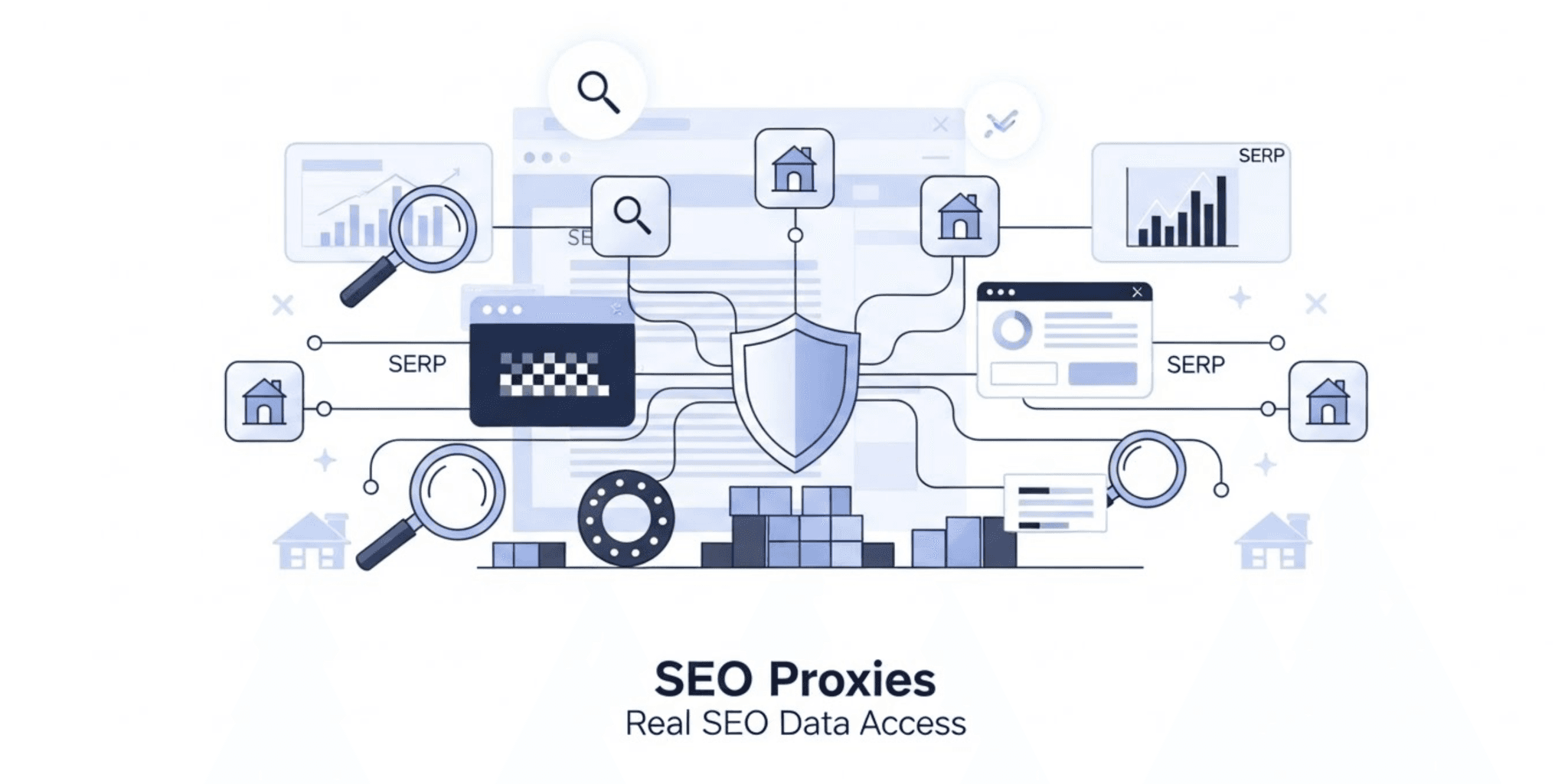
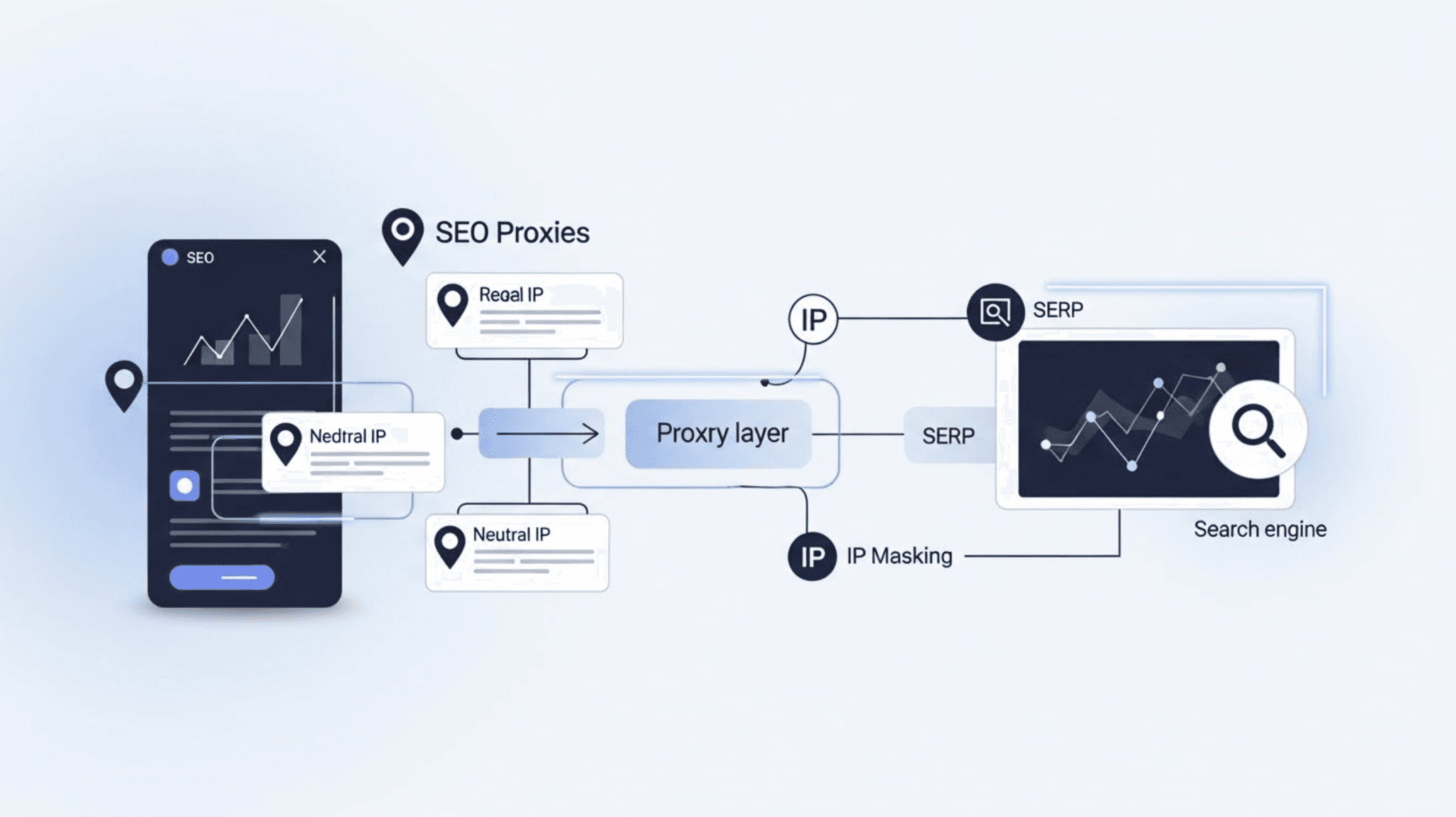
An SEO proxy acts as an intermediary server between your tool and the search engine. Instead of sending all requests from your own IP address, the requests are routed through other IPs. This spreads activity naturally and helps avoid blocks, rate limits, and distorted results.
More importantly, proxies allow you to see neutral search results. No personalization. No location bias. Just what real users see in a specific country or city, as proxies conceal your real IP address from search engines.
SEO proxies work by masking your real IP address, enhancing anonymity and making your SEO activities more effective and protected.
For anyone doing SEO seriously, this makes a noticeable difference.
Private proxies are often used for more secure and precise SEO tasks, such as rank tracking, competitor research, and local SEO.
Where SEO Proxies Are Used in Practice
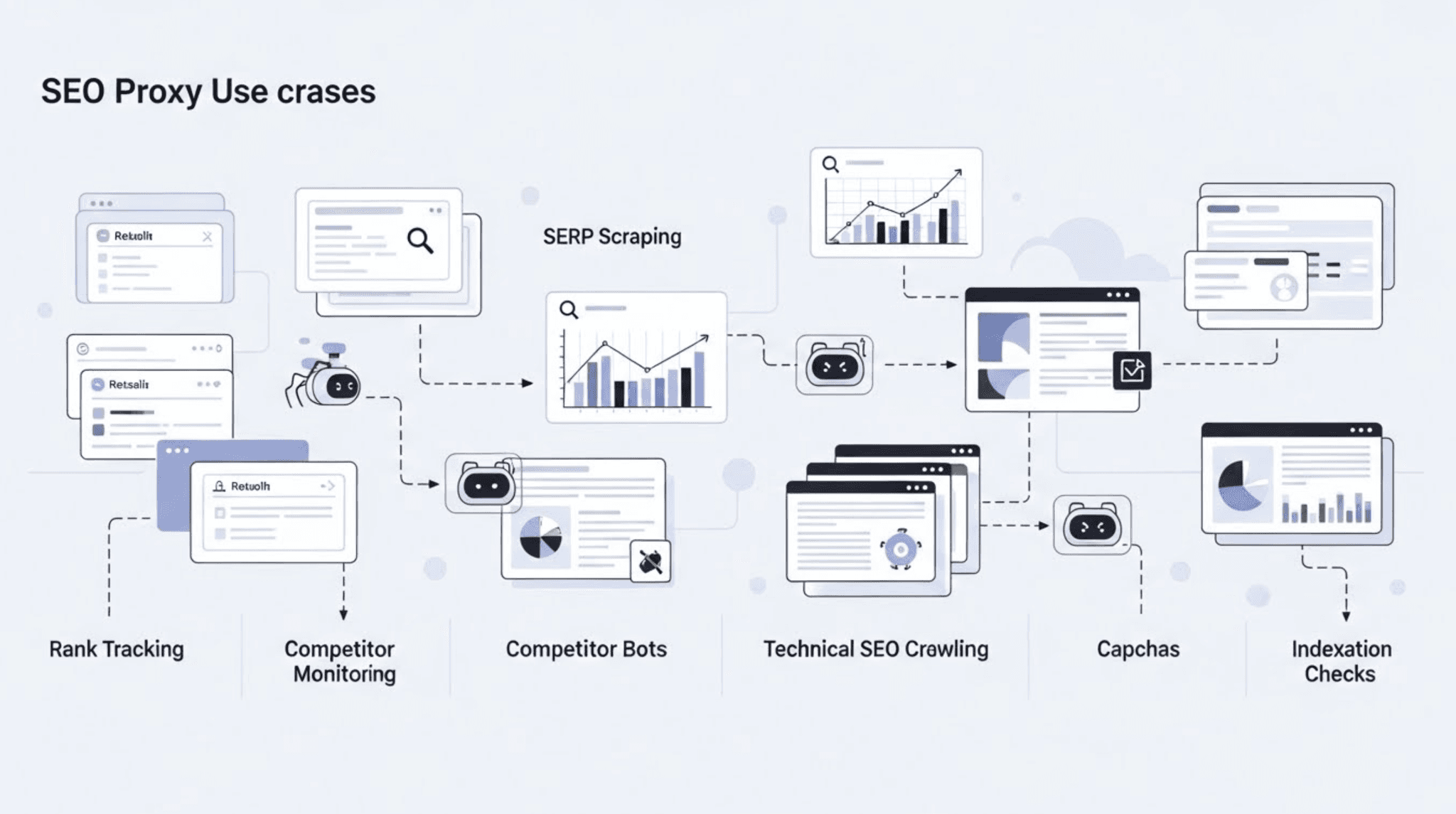
Rank Tracking Without Guesswork
Search results change based on location, device, and behavior. Checking rankings from your own browser tells you almost nothing about your actual keyword rankings across different locations.
SEO proxies let rank tracking tools query Google from different locations consistently. This is especially important for international SEO, local SEO, and agencies managing multiple regions.
Proxies are essential for effective SERP tracking and monitoring search rankings without being blocked, ensuring you get accurate data for your SEO strategy.
SERP Scraping and Keyword Research
Scraping search results without proxies rarely ends well. After a few requests, captchas appear or access is blocked completely.
Accurate SERP data is essential for keyword tracking, competitor analysis, and optimizing SEO campaigns. Without reliable access to real-time search engine results, it's difficult to monitor rankings or gain competitive intelligence.
Using rotating proxies allows tools to collect titles, descriptions, featured snippets, People Also Ask boxes, and other SERP elements without interruptions, and helps gather real-time SERP results for more effective SEO strategies. This is one of the most common SEO proxy use cases.
SEO proxies are crucial for obtaining reliable search engine data, even when facing scraping restrictions, geographic localization, or bot detection.
Competitor Monitoring
Competitor analysis often involves gathering data from other websites, including monitoring competitor rankings, ads, and content updates, which requires frequent checks. Doing that from one IP is risky and unreliable.
Proxies spread those checks naturally and make long-term monitoring possible. Using proxies for competitor analysis provides a better understanding of market trends and strategies.
Technical SEO and Crawling
Large site audits can involve thousands of URLs. Without proxies, crawlers often get throttled or blocked mid-audit.
Using dedicated proxies can help ensure high speed and successful requests during large site audits.
Using proxies helps ensure crawls finish properly and data stays consistent, especially for enterprise-sized sites where high speed and successful requests are critical.
Indexation and Link Checks
Repeatedly checking whether pages or backlinks are indexed can easily trigger limits. Proxies help keep these checks stable and avoid sudden access issues. By using proxies, you also help prevent the loss of valuable data during repeated indexation and link checks.
Which Types of Proxies Work Best for SEO
Not all proxies are equal, especially for search engines. Specialized proxy servers, also known as SEO proxies, are designed to safely scrape search engine results, avoid bans, and gather competitive SEO data to improve rankings and traffic.
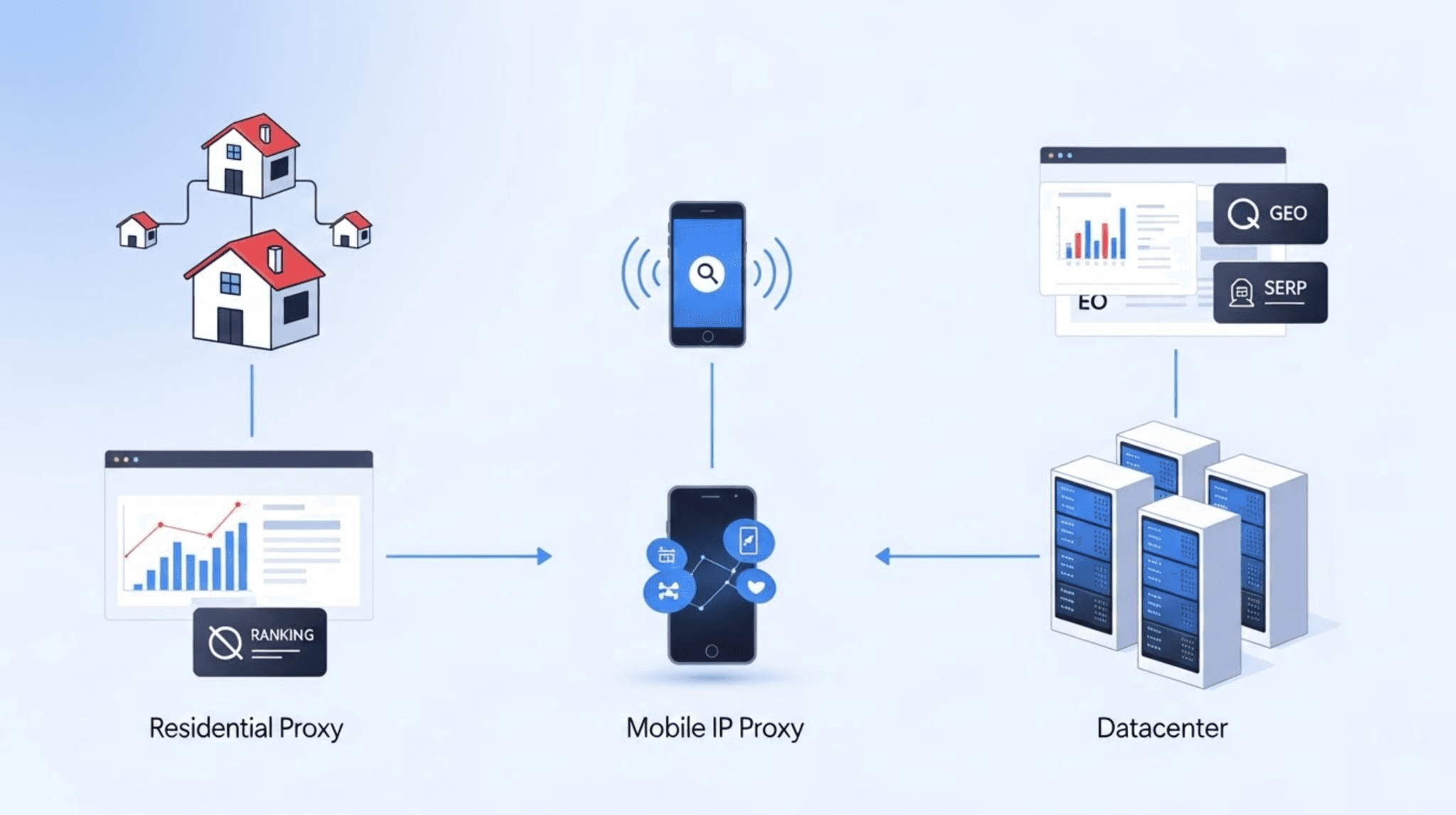
Residential proxies are the most trusted option for SEO. They use IPs assigned to real household devices, which makes them far less likely to trigger blocks. Some proxies also originate from real mobile devices and connect to the target website via mobile networks, providing an additional layer of authenticity. Rotating residential proxies are ideal for SEO tools, as the IP changes automatically between requests.
Datacenter proxies are faster and cheaper, but they are easier for search engines to detect. They can still be useful for lighter SEO tasks or internal tooling. High bandwidth is a key feature of datacenter proxies, ensuring fast and efficient execution of SEO tasks.
For most SEO professionals, residential rotating proxies are the safest long-term choice. Proxies also enable access to geo-restricted content and help gather local content, which is essential for targeted SEO strategies.
Are SEO Proxies Safe to Use?
Yes, when used responsibly. SEO proxies are meant for data collection, not abuse. Using high-quality IPs, rotating them properly, and keeping request volumes reasonable goes a long way.
Cheap or overloaded proxy networks often cause more problems than they solve. Clean IP pools and stable infrastructure matter, especially when SEO tools run daily.
SEO agencies rely on safe, high-quality proxies for large-scale data gathering and rank tracking.
SEO Proxies: Key Takeaways
SEO proxies are not a shortcut or a trick. They are part of the technical foundation behind modern SEO work. Without them, ranking data becomes unreliable, scraping breaks, and automation stalls.
Whether you're tracking keywords, analyzing competitors, or running large audits, the right proxy setup makes SEO work smoother, more accurate, and far less frustrating. Proxies also enable you to access localized search results and SERP data tailored to your target audience, ensuring your SEO strategies are more targeted and effective.
If SEO is data-driven, proxies are what make that data possible. At LightningProxies, we provide the residential and datacenter proxy solutions that power serious SEO work.
SEO Proxy FAQs
What is an SEO proxy?
Why can't I do SEO tasks without proxies?
Which LightningProxies product should I use for SEO?
Will using SEO proxies hurt my website rankings?
Are SEO proxies legal to use?

October 15, 2025
Guide
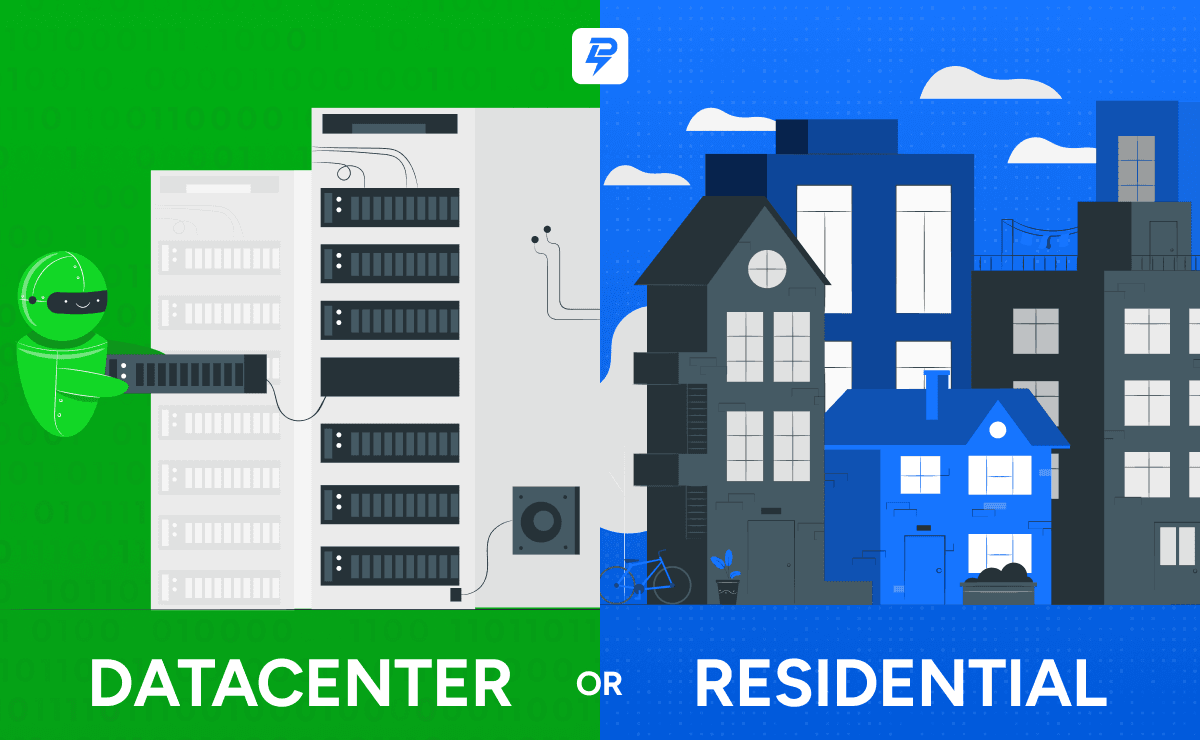
Datacenter vs Residential Proxies
Understand datacenter vs residential proxies: how they work, pros/cons, IP rotation, and when to use each for SEO and other tasks.
September 29, 2025
Guide
What Is a Residential Proxy: Complete Guide 2025
Learn everything about residential proxies: how they work, types, benefits, and use cases for web scraping and SEO.
October 03, 2025
Announcements
Proxy Meaning: What Does a Proxy Really Do
Discover the true meaning of proxy servers and how they work.