Blog / Guide
Write to UsFacebook Proxies: Why You Might Need One and How They Work
April 29, 2026
Guide
Facebook actively monitors login location, IP history, device behavior, and account activity. While this improves security, it can create friction for businesses that run multiple accounts or operate across countries.
A Facebook proxy routes your connection through another IP, helping teams keep access stable, reduce unnecessary verification checks, and support professional workflows at scale.
What Is a Facebook Proxy?
A Facebook proxy is a proxy server used specifically when accessing Facebook. Instead of connecting directly, traffic flows through the proxy first, so Facebook sees the proxy IP rather than your own network identity.
This allows you to:
- Log in from different geographic locations
- Separate multiple Facebook accounts more safely
- Avoid repeated security checks
- Reduce temporary access restrictions
- Test regional content and ad visibility
- Bypass geographic limits where access is restricted
Facebook proxies are also used for compliant public-data research and scraping workflows where stable access is required.
Why Businesses Use Proxies for Facebook
Managing multiple accounts
Agencies often manage many pages and ad accounts. Assigning one stable proxy per account helps avoid suspicious login patterns and lowers lock or verification risk.
Running international advertising campaigns
Ad previews vary by country. Proxies allow teams to check localized targeting, language variants, and competitor placements.
Social media automation workflows
Approved automation tools perform more consistently when requests are distributed across multiple IPs instead of one overloaded endpoint.
Researching market trends on Facebook
Researchers tracking public pages and discussions use proxy networks to reduce unusual request patterns and maintain smoother access to public data.
Which Type of Proxy Works Best for Facebook?
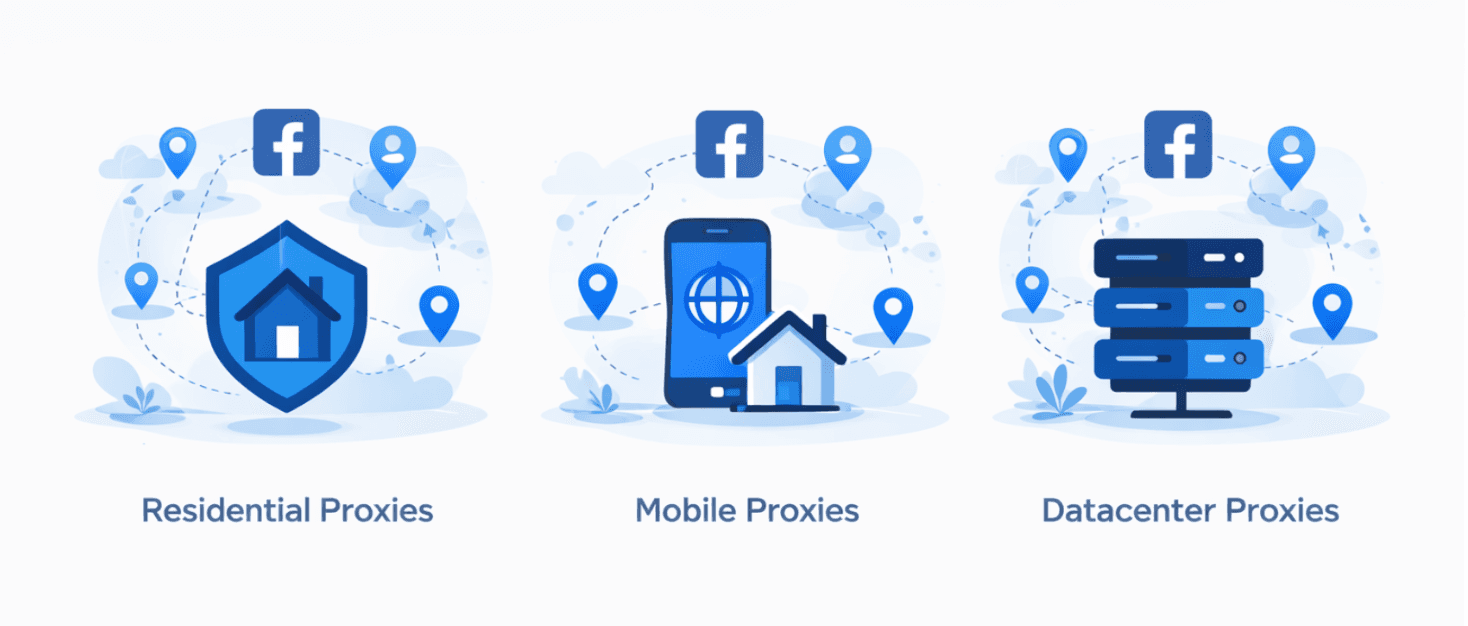
Residential proxies
Residential proxies are typically the safest option for Facebook because they resemble normal user traffic and are less likely to trigger automated detection.
Mobile proxies
Mobile proxies are highly trusted by social platforms due to natural carrier IP behavior and are useful across Facebook and Instagram operations.
Datacenter proxies
Datacenter proxies are fast and cost-effective, but they can be easier for social platforms to identify. They fit lower-risk use cases.
For long-term account stability, most teams prefer residential or mobile setups with one unique IP strategy per account.
Setting Up a Facebook Proxy
Setting up a Facebook proxy is straightforward:
- Choose a proxy plan based on IP count, bandwidth, and regions
- Configure browser/device proxy host and port
- Test the connection before account login
- Assign a unique proxy to each managed account
- Monitor speed and proxy health over time
The added network hop may slightly affect speed, but usually improves operational stability and security.
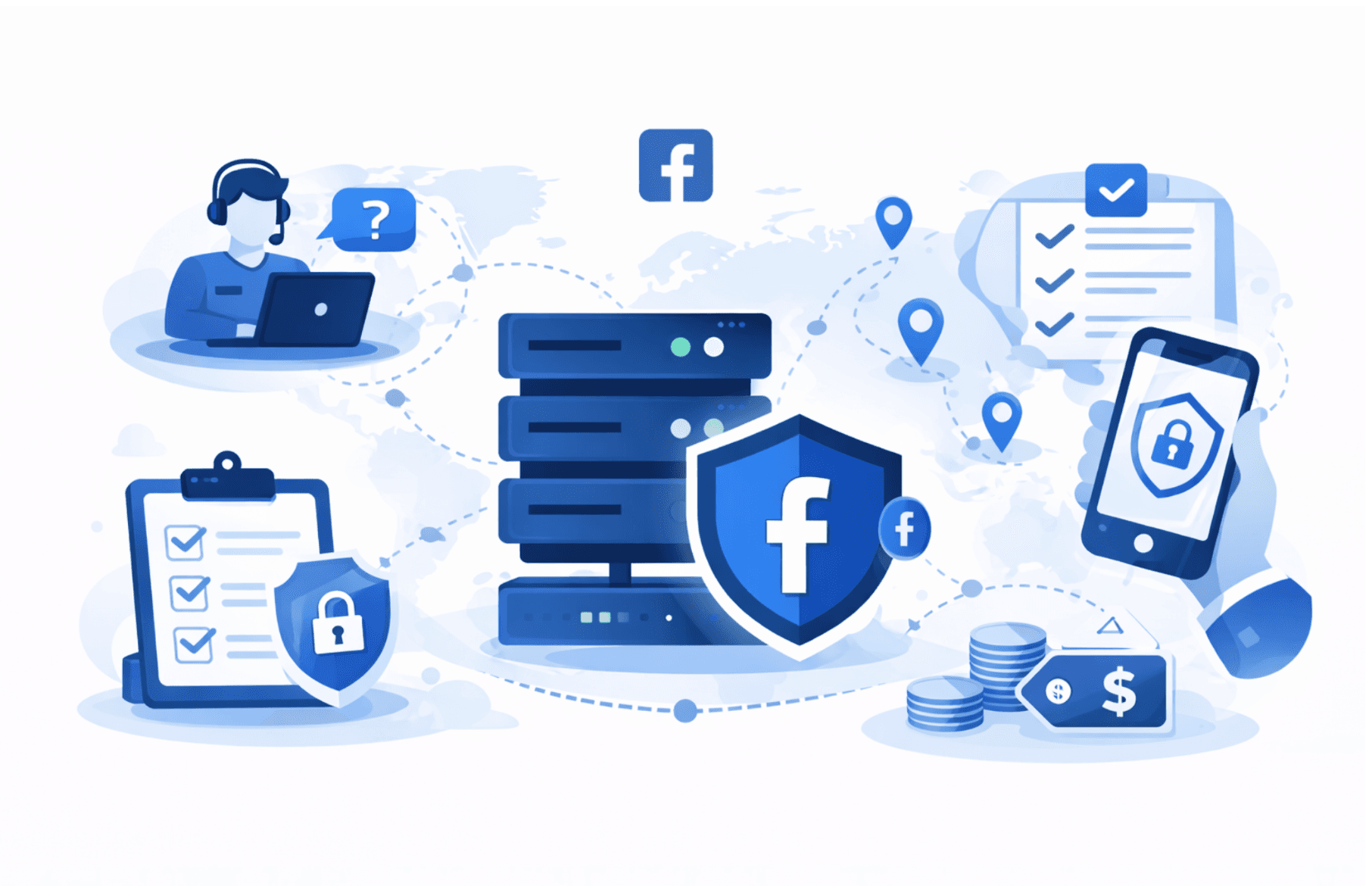
Choosing a Facebook Proxy Provider
Evaluate providers on:
- Reliability and uptime
- Proxy quality (residential/mobile preference)
- Geo-location coverage
- Customer support responsiveness
- Plan pricing and included limits
- Security features and encryption
The right provider should support secure, stable, and scalable Facebook account management workflows.
Tips for Using a Facebook Proxy Safely
To keep access stable and reduce risk:
- Keep one consistent proxy per account
- Avoid frequent location switching
- Use similar regions for repeat logins
- Pair proxies with stable browser profiles
- Avoid sudden spikes in activity
Stability in behavior usually matters more than aggressive proxy rotation.
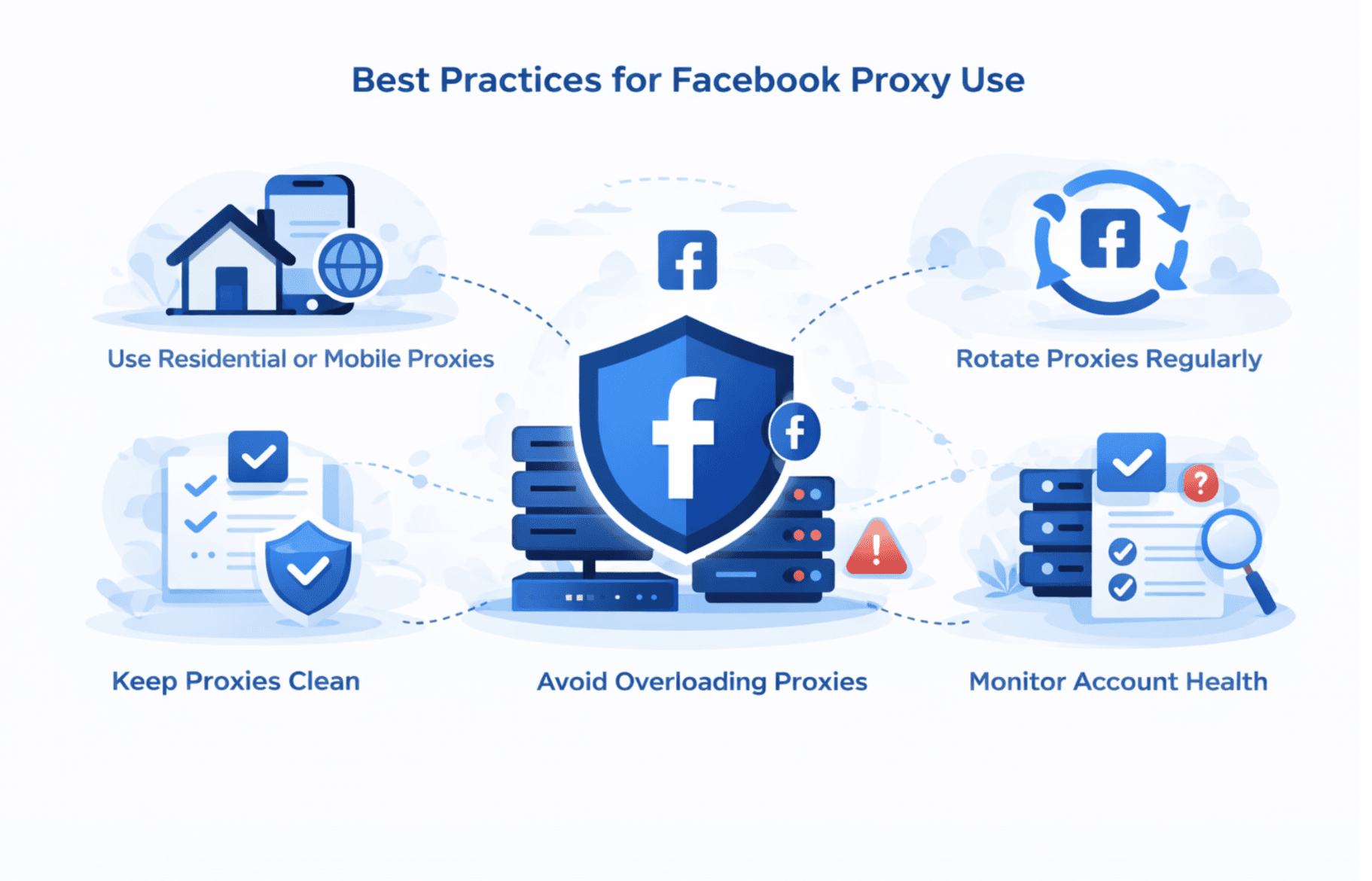
Best Practices for Facebook Proxy Use
- Prefer residential or mobile proxies for trust signals
- Rotate strategically for multi-account and scraping tasks
- Avoid overloading one proxy with too many accounts
- Keep proxies clean and avoid abusive behavior
- Monitor account health and unusual activity regularly
- Stay aligned with platform policies and terms
Common Mistakes When Using Facebook Proxies
- Using low-quality proxies that are already flagged
- Not rotating when workload requires distribution
- Overloading individual proxies
- Ignoring policy updates
- Failing to monitor account restrictions
- Using proxies for spam or malicious activities
Why Facebook Proxy Use Is Growing
As Facebook strengthens security and personalization, reliable multi-location access is increasingly important for business teams.
Proxies are now commonly used for:
- Social media agencies
- International brands
- Ad verification teams
- E-commerce marketers
- Public sentiment researchers
Used responsibly, proxies become infrastructure for stable and scalable social operations.
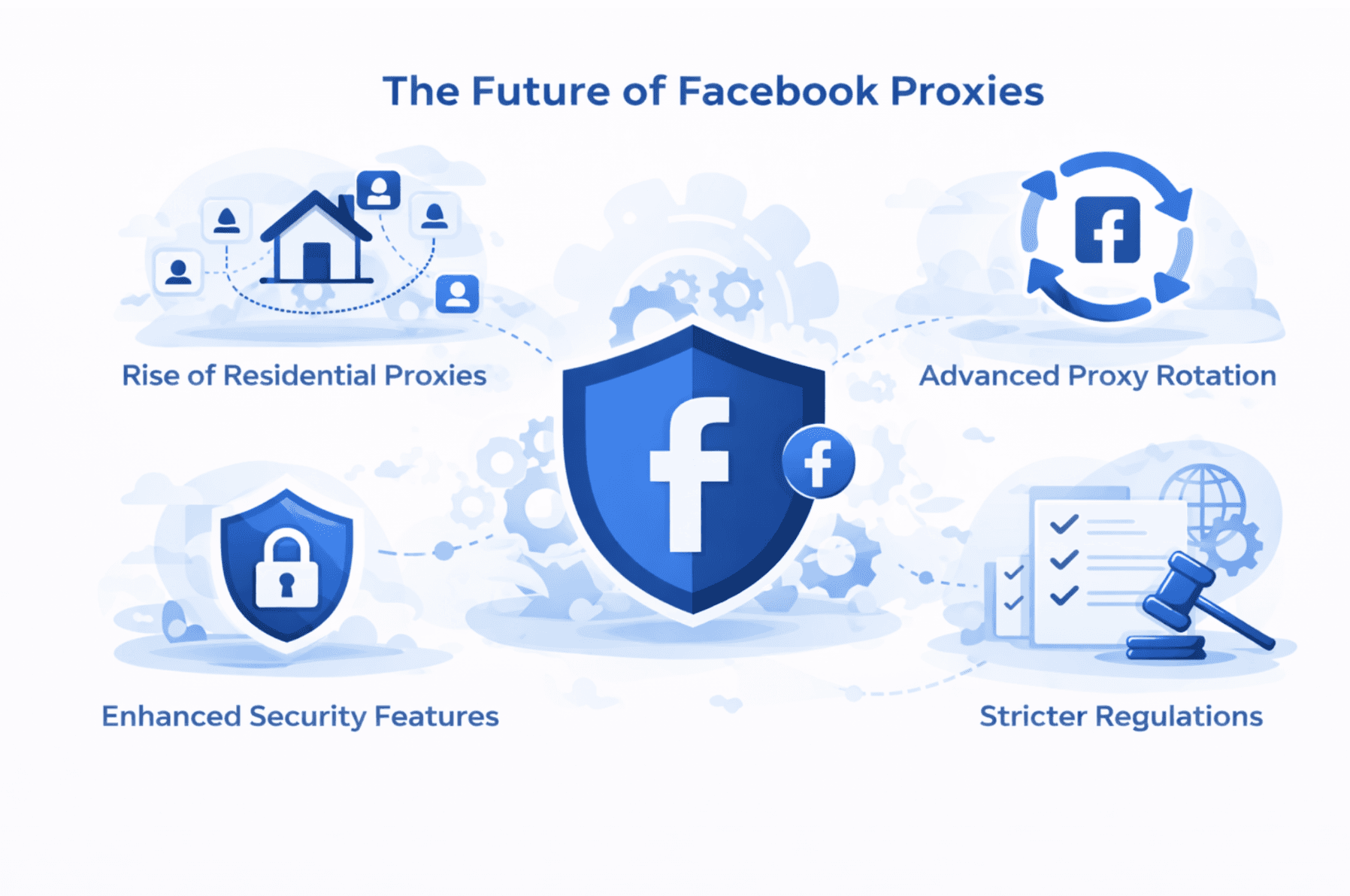
The Future of Facebook Proxies
- Wider use of residential IPs for authenticity
- Smarter proxy rotation to reduce detectable patterns
- Stronger security and encryption expectations
- Stricter platform rules requiring compliant providers
Teams that prioritize reliability, compliance, and stable behavior will be best positioned as proxy tooling evolves.
Facebook Proxy FAQs
What is a Facebook proxy used for?
A Facebook proxy routes access through a different IP address so businesses can manage multiple accounts, preview region-specific ads, run social tools, and reduce repeated security checks.
Is using a proxy for Facebook allowed?
Which proxy type is safest for Facebook accounts?
Can a proxy prevent Facebook account verification requests?
Do Facebook ads look different in other countries?
Should I change proxy locations frequently on Facebook?

LightningProxies Team
Technical Writers @LightningProxies
February 18, 2026
Guide
What Is a Mobile Proxy?
Learn what a mobile proxy is, how it works, and why it is valuable for social media, SEO, ad verification, and web scraping workflows.
November 20, 2025
Guide
Can You Have Multiple Instagram Accounts?
Discover practical ways to manage multiple social accounts more safely, including proxy and browser profile strategies for teams.
November 17, 2025
Guide
Effective Ad Verification Using LightningProxies
Learn how ad verification teams use proxies to confirm placements, monitor geo targeting, and reduce wasted ad spend.